Logan County farmer sells raw milk to Nashville buyers without state inspection
Mike Armstrong distributes 500 gallons weekly across Kentucky and Tennessee using a legal loophole that exempts his farm from routine health checks.
By Fernando Rojas ·
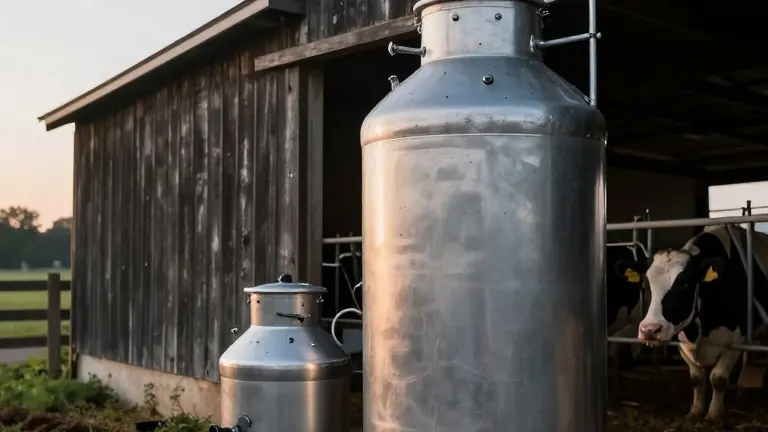
Mike Armstrong sells 500 gallons of raw milk every week to customers in Kentucky and Tennessee. He runs a third-generation dairy farm in Logan County, Kentucky, and began distributing unpasteurized milk a decade ago after his commercial operations started to struggle financially.
Armstrong said the switch was a necessity to keep the farm alive. He noted that commercial dairy margins were thin, while the niche market for raw milk offered a way to add value to the product. "We started doing the raw milk about 10 years ago as a means to stay afloat," Armstrong said. "We were going broke on the commercial side, so we were adding value (because) it was a niche market."
In Kentucky, Armstrong operates under a legal structure called herd-sharing. Under this model, he sells customers a share in a specific cow. The milk they receive comes from that cow, which makes the sale technically legal under state law. Tori Embry, executive director of the Kentucky Dairy Development Council, explained that this classification prevents the state from treating these farms the same as permitted commercial dairies.
"If you’re a permitted dairy, you have to be regularly inspected … inspectors coming out to your dairy, checking for cleanliness around your facility," Embry said. "And if you’re not permitted, then you’re not having any of those checks done. There’s not a partnership there, so it’s really independent farmers setting their own standards for quality and milk handling."
Thomas Powell, a professor of animal science at Murray State University, warned that this lack of oversight poses risks, particularly for vulnerable consumers. He identified immunocompromised individuals, including young babies, pregnant women, and the elderly, as being most susceptible to serious disease from pathogens like E. coli, listeria, and salmonella. Powell noted that pasteurization serves as a final safeguard against these contaminants.
The risk is not theoretical. In September, an outbreak linked to unpasteurized cheese contaminated with E. coli resulted in 13 people experiencing symptoms and eight hospitalizations. One confirmed case came from Kentucky. While Armstrong argues that pasteurization removes nutrients that must be added back later, Powell stated that there is no scientific backing for claims that raw milk has superior protein or mineral content.
Armstrong’s business relies heavily on the proximity of Nashville. He said many of his customers are people relocating from California, where raw milk sales are legal. He distributes the product through farmers markets and drop points in both states. However, the rules differ between the two. Tennessee requires herd-share farms to keep a list of members for three years and stop distribution if contamination is found.
A Tennessee health official recently contacted Armstrong about federal guidelines for selling raw milk across state lines. These rules would require labeling the product as "for pet consumption only" and obtaining a pet feed license. "If we put our product on the shelf, and there’s another food source, it has to be 18 inches away from the other food source, and it has to have that pet food label on it," Armstrong said.
Armstrong takes his own safety procedures seriously. He sanitizes each cow with individual peroxide wipes before milking and uses two chilling containers, hand-scrubbing one while the other is in use. He expressed concern for smaller producers who may use less rigorous methods. "They milk that cow and put it in a milk can and set it in a creek to cool it," Armstrong said. "That’s not (how that) works."
Despite his confidence in his process, Armstrong supports state regulations for the herd-share industry to ensure broader safety standards. He suggested that regular inspections, similar to those for commercial farms, would be beneficial. Currently, dozens of herd-share farms operate across Kentucky with no standardized regulations. Powell advised that the safest option for consumers is to visit the farms directly and observe the milk collection processes, while recommending that high-risk individuals avoid raw milk entirely.
Source: WNXP · original report published
More News · Nashville news · Report a business · Got a Story?