Georgia records record tourism numbers as political standoff enters second year
More than 5.5 million visitors arrived in 2025, an 8.4% jump, even as protests against the Georgian Dream government continue every weekend in Tbilisi.
By Leah Thompson ·
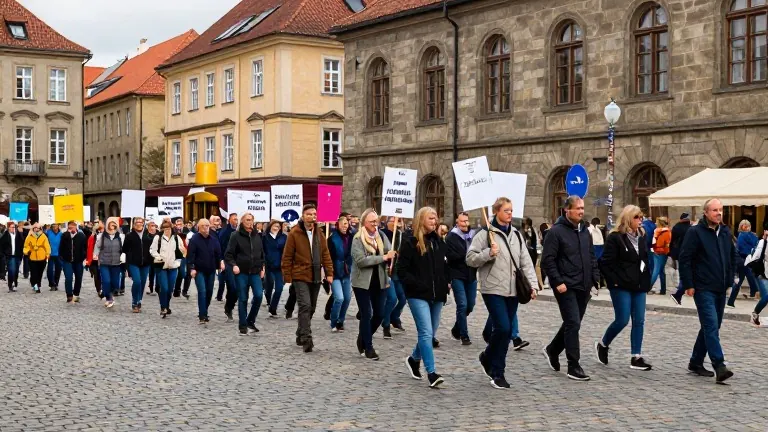
Monday marks the two-year anniversary of the contested parliamentary elections in Georgia that sparked the current political crisis. Protests began two days after the vote on 26 October 2024 and have continued weekly since. Every Saturday, demonstrators gather in Avlabari Square in Tbilisi’s Armenian quarter. They march toward parliament, chanting against the government of Prime Minister Irakli Kobakhidze.
Despite the unrest on the streets, the country’s tourism sector hit a new high in 2025. The Georgian National Tourism Administration reported more than 5.5 million international visits. That figure represents an 8.4% increase over 2024. It is nearly ten times the approximately 560,000 visitors recorded two decades ago. Travelers arrived from Europe, the Middle East, and Russia, drawn by the nation’s historic sites and landscapes.
The influx of Russian tourists and residents has complicated domestic politics. After Russia invaded Ukraine in 2022, tens of thousands of Russian citizens moved to Georgia. They brought capital and opened businesses but also drove up property prices. Many Georgians view Russia with suspicion due to the 1990s wars and the 2008 conflict in South Ossetia and Abkhazia. Those regions remain under Russian military control and account for about 20% of Georgian territory.
Georgian Dream, the ruling party since 2012, faces criticism for suspending EU accession talks. The government announced in November 2024 that it would not prioritize opening EU negotiations before the end of 2028. This decision fueled accusations that the party, led by billionaire Bidzina Ivanishvili, is moving the country closer to Moscow. Ivanishvili founded the party in 2012 after serving as prime minister briefly and making his fortune in Russia during the 1990s.
The economy shows mixed signals. GDP rose by 7.5% in 2025, marking five consecutive years of expansion. Yet unemployment, low wages, and poverty persist, particularly in rural areas. Diplomatic relations with the EU have deteriorated as Brussels criticizes the government’s record on the rule of law. Meanwhile, Moscow remains a key economic partner through trade, tourism, and energy imports.
Georgia sits between Russia and Turkey, a position that shapes its geopolitical vulnerabilities. The nation emerged from the Soviet Union in 1991 and now has a population of fewer than 4 million. Its future may depend on the outcome of the war in Ukraine. A stronger Russia could exert more pressure on the Caucasus, complicating Georgia’s path toward European integration.
Source: The Guardian