Federal Judge Fast-Tracks Motion To Dismiss DOJ Suit Over Alaska Senate Race
The Justice Department seeks to delay certification of the election, claiming a second candidate named Dan Sullivan was a planted decoy by the Democratic campaign.
By Gavin Wilson ·
A federal judge is fast-tracking motions filed by the Senate candidates to dismiss a lawsuit brought by the U.S. Justice Department. The suit seeks to delay the certification of the Alaska Senate race. It argues that the incumbent Republican lost by a margin attributable to a specific campaign strategy.
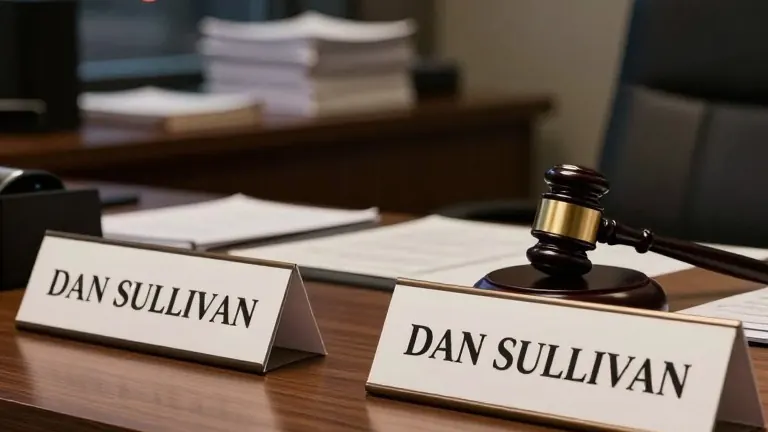
The legal dispute stems from the presence of two Republican candidates named Dan Sullivan on the ballot. Sen. Dan Sullivan, the incumbent, faces Rep. Mary Peltola, a Democrat. The race also features Dan J. Sullivan, a retired teacher from Petersburg, Alaska. A New York Times investigation reported that Dan J. Sullivan was likely a plant arranged by Peltola's campaign. Peltola has denied involvement in the plan.
Alaska Gov. Mike Dunleavy, a Republican, ordered an investigation into the matter. He is determining whether Peltola's campaign should face criminal charges or civil penalties. The investigation focuses on allegations that the campaign searched the state for white men named Dan Sullivan to confuse voters.
The Justice Department's lawsuit contends that the state's regulation of the election was compromised. The candidates' legal team filed a motion arguing that the federal government lacks the statutory authority to bring the case. The motion states that the U.S. Constitution leaves the regulation of federal elections exclusively to the states and Congress.
President Donald Trump publicly weighed in on the controversy via social media. He claimed that Democrats in Alaska illegally searched for and recruited a man named Dan Sullivan to run against the incumbent. He argued the tactic was designed to defraud and confuse the election, taking votes away from the real senator.
Legal experts and political historians note that ballot stacking is a common tactic. The New York Times report acknowledged that such tactics are generally considered legal and have been used by both parties in Alaska. The practice involves placing multiple candidates with identical names on a ballot to split the vote of a specific group or confuse the electorate.
Similar incidents have occurred in recent years. In 2024, three candidates named Bob Ferguson ran in the Washington state gubernatorial primary. Two were Republican-backed decoys who dropped out after the lead candidate threatened legal action. Thomas Kahn, director of the Center for Congressional and Presidential Studies at American University, described ballot stacking as a time-honored tradition. He noted that if trying to confuse voters were a crime, every politician would be in jail.
The Alaska race remains highly contested. The outcome could determine control of the U.S. Senate. The federal court's decision on the dismissal motion will determine whether the election certification proceeds on its original schedule or faces further delay.
Source: WERE