Los Angeles Election Wagers Expose Gaps in Prediction Market Integrity
New analysis reveals how large single trades can temporarily distort odds on political contracts, raising questions about market influence on voters.
By Leah Thompson ·
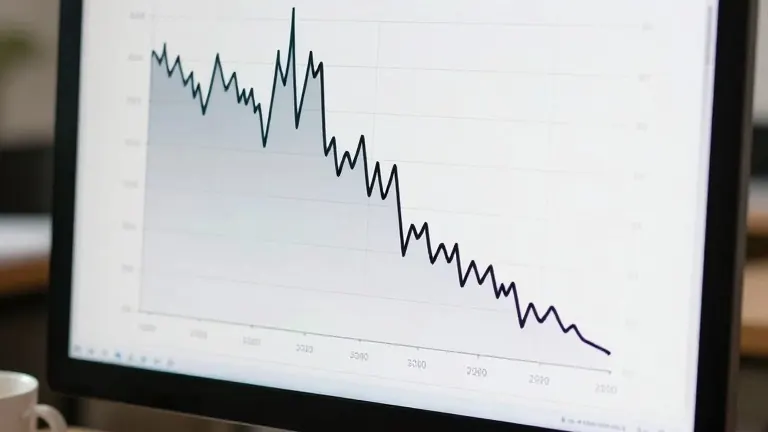
Analysis by the Anti-Corruption Data Collective, or ACDC, reveals that prediction markets for the 2026 Los Angeles mayoral race experienced repeated price spikes that temporarily inflated the odds of former reality television star Spencer Pratt winning. These fluctuations occurred despite Pratt finishing third in the June primary, a result that contradicted the high confidence shown in the markets just before the vote.
Pratt entered the race after the Palisades fire destroyed his home, using his criticism of the city’s response as a campaign platform. Speculators poured more than $47 million into contracts on Kalshi, Polymarket U.S., and Polymarket International, making it the most heavily traded mayoral contest of 2026. On the eve of the primary, one market assigned Pratt a 78% chance of advancing to the November runoff. The actual vote count showed a different picture, leading some supporters to question the election's integrity.
Dean Logan, the registrar-recorder for the Los Angeles County Clerk's Office, addressed the confusion in a statement to CNBC. He noted that prediction markets can add to public confusion when people treat their projections as more authoritative than the actual votes being counted. The discrepancy between market odds, traditional polling, and final results has grown as election wagering becomes a more prominent feature of the political process.
ACDC’s data suggests that these markets are vulnerable to manipulation. The group analyzed 167 congressional markets across Polymarket International and Kalshi that were worth more than $100,000. They found that 38 of these markets, or about 23%, experienced price spikes that moved the contract price by 30 cents or more. One specific example involved a contract on Juliana Stratton, the Democratic nominee for Senate in Illinois. On March 3, two large purchases pushed the price of her winning contract from 47 cents to 79 cents in seconds, before it briefly spiked to 99 cents. The price eventually settled at 52 cents, five cents higher than its starting point, after buyers spent a combined $8,000.
Kalshi detected similar activity in the Pratt race. In a case study published in July, the platform reported that a trader spent $1.25 million on Yes contracts for Pratt on May 20. This trade caused the price to jump from 29 cents to 45 cents, implying his chances rose from 29% to 45%. Kalshi said the price reverted within nine seconds, and the market self-corrected by the end of the day. Robert DeNault, head of enforcement at Kalshi, stated that rational traders are willing to take those trades and bring the price back to where it belongs.
However, ACDC’s analysis extended the timeframe beyond Kalshi’s initial observation. The group found that if the window is expanded to three hours after the spike, the price landed three cents higher and sustained that level for about two hours. The researchers argue that the longer a price increase lasts, the greater the risk that observers will interpret the movement as genuine market sentiment rather than a temporary anomaly.
A study funded by the Brennan Center for Justice found that voters are between 10 and 20 percentage points more likely to believe a candidate will win if prediction markets favor that candidate, regardless of what polls report. The survey included 1,994 registered voters in September. ACDC’s data shows that shifting odds is cheaper in less liquid markets. Of 18,000 active congressional markets, 88% could have their prices moved by 10 cents with a single wager under $1,000.
Both Kalshi and Polymarket U.S. are regulated by the Commodity Futures Trading Commission, which has rules designed to prevent market manipulation. The platforms collect customer information, including legal names and Social Security numbers, but the public has no insight into who is behind specific trades. Polymarket International partnered with Chainalysis in April to help track suspicious trading on its blockchain-based platform.
Kalshi reports that its markets have favored the eventual winner in roughly 9 out of 10 cases in U.S. elections since 2024. The Washington Post examined 268 candidates who received a 70% to 80% chance of winning on Kalshi or Polymarket in the two months before primaries this year. Three-quarters of those candidates won. Kalshi added transparency features to its midterm markets earlier this month, including labels for low-activity markets and live feeds of individual trades.
Source: CNBC