Supreme Court Reviews Palestine Action Ban in Two-Day Trial
The UK's highest court hears arguments on whether the 2025 proscription of the direct action group violated human rights, with proceedings opening Wednesday.
By Fernando Rojas ·
Britain's Supreme Court begins a two day hearing this week to determine the future of Palestine Action, the direct action group banned under terrorism laws in July 2025. The trial, scheduled to start Wednesday, represents the final legal challenge to the government's decision to criminalize membership and public support for the organization. Part of the proceedings will be held in private due to the national security sensitivity of certain evidence presented by the state.
The legal dispute stems from the Home Office's assessment of the group's activities. In written submissions, the defense team highlighted that the government's own analysis found less than one percent of the group's actions over a five year period met the legal definition of terrorism. Raza Husain KC, representing co-founder Huda Ammori, specified that only three out of 385 recorded actions were assessed as falling within the scope of the Terrorism Act. This data forms the core of the argument that the proscription was a disproportionate response to the group's direct action campaigns against arms suppliers.
The case has moved through the English court system since the ban was enacted. In February 2026, the High Court ruled the proscription unlawful and a disproportionate interference with human rights. The Court of Appeal overturned that decision in June 2026, restoring the terrorism designation. Supreme Court justices granted Ammori permission to pursue a final appeal in August 2026, setting the stage for the current proceedings.
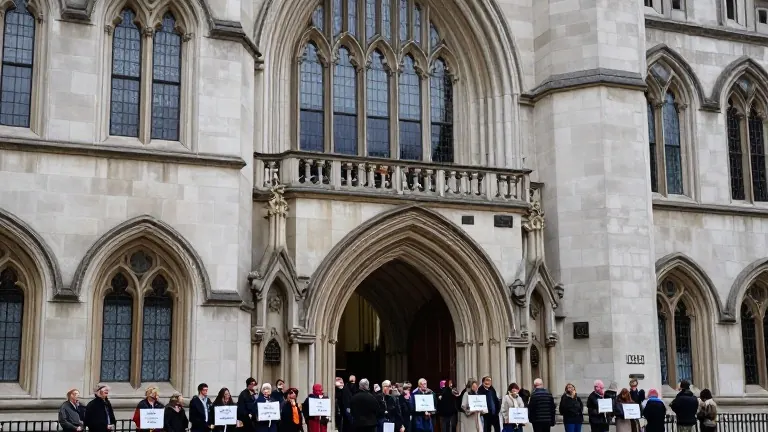
The ban has triggered a wave of civil unrest and police activity across Britain. Since the group was outlawed, four thousand people have faced arrest under the Terrorism Act. Demonstrators in London and Edinburgh were arrested over the weekend for holding placards with the phrase "I oppose genocide, I support Palestine Action." Among those arrested were human rights lawyers, elderly activists, and Holocaust survivors, a mix that has drawn scrutiny to the application of the law.
The government maintains that the ban is legally sound. James Eadie KC, the standing counsel for the state, argued that the Court of Appeal applied long standing and orthodox legal principles. He stated that the appellate court made no error of law and that its factual conclusions were plainly justified by the evidence. The defense counters that using counterterrorism laws to target a political group sets a precedent that could criminalize broader political dissent.
The controversy has extended beyond the courtroom into cultural and public spheres. Books by Irish novelist Sally Rooney were withdrawn from sale in the UK after she expressed support for the group, sparking debates about free speech. Human rights organizations and United Nations special rapporteurs have submitted written statements warning that the ban creates a chilling effect on civil society. The Community Security Trust and the Jewish Leadership Council also submitted evidence in support of the proscription, arguing it protects Britain's Jewish community.
Foreign Secretary Ed Miliband acknowledged the unintended consequences of the enforcement. He told LBC News that the ban had led to the arrest of "grannies and vicars" for terror offences. Miliband noted that while no one intended to criminalize such individuals, the Supreme Court must now examine the issue. The government continues to monitor the situation as the highest court reviews the case.
Source: Middle East Eye