Jerusalem man held world's first British Mandate passport in 1925
Avraham Saide, who fled to Argentina as a teenager, secured the document in Buenos Aires before returning to help fight for Israeli independence.
By Mia Bennett ·
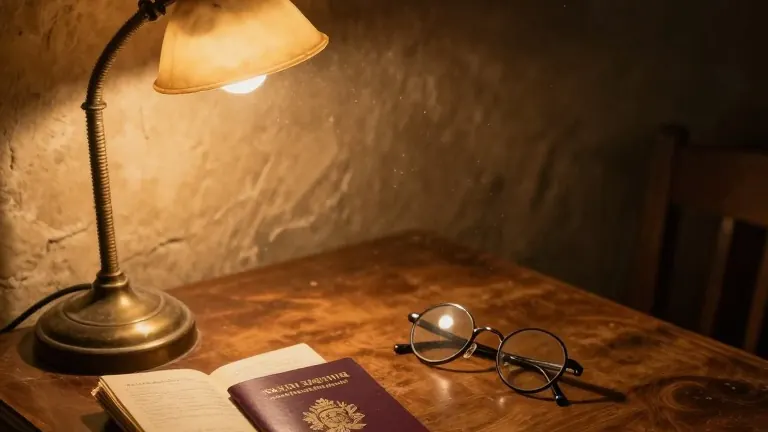
Avraham Saide held a unique distinction in the early 20th century. He possessed the first registered British-Palestine passport, a document issued in 1925 that predated similar records for other historical figures. His descendants marked the 100th anniversary of this specific issuance on November 3.
Saide obtained the passport in Buenos Aires, Argentina. At the time, the city was the destination for many Jewish refugees and immigrants. Saide had traveled there from Syria, where he had boarded a ship after leaving Jerusalem in 1923. He was 17 years old when he first departed his native city to search for his paternal relatives.
The British Government passed the Palestinian Citizenship in the Mandate Act in 1925. This legislation allowed for the creation of the specific passport that Saide acquired. He secured the document directly from the British Consul in Argentina. Golda Meir and David Ben-Gurion were also among the early recipients of this identification, but Saide's copy is recorded as the first issued.
After receiving the passport, Saide returned to the Yishuv, the Jewish settlement in Palestine. He worked as a cloth merchant to support his family. His route back to the region included a journey to Alexandria, Egypt, where he traveled with a Bedouin caravan. This path allowed him to bypass the colonial railway that connected Jerusalem to the Egyptian city.
In Alexandria, Saide met Mazal Fortuna at a local synagogue. She was 15 years old at the time. Her family, described as enthusiastic Zionists, invited him to a Shabbat meal because he originated from Jerusalem. The couple married and later returned to the Yishuv with their first son, named Sion after Saide's father.
Saide's political views shifted as the 1930s progressed. He opposed the continued British presence in the region. Reports from the Peel Commission in 1937, the Woodhead Commission in 1938, and the White Paper of 1939 confirmed his concerns. The White Paper restricted Jewish immigration to 15,000 people per year, a limit that seemed to contradict the commitments made in the 1917 Balfour Declaration.
During World War II, Saide became a medical orderly at age 40. He joined the Irgun underground movement. He carried secret messages hidden inside sterile dressings to figures including Yitzhak Shamir and Dov Gruner. When British guards inspected him, he explained that opening the dressings would destroy their sterility and render them useless for healing patients.
By the 1948 War of Independence, Saide had changed his surname to Sade. He lived in the Shimon Hatzadik neighborhood of Jerusalem. His family, which included six children, fled to western Jerusalem as the Royal Jordanian Legion advanced. The unit was commanded by Lt. Col. Abdullah al-Tell, who reported to Sir John Glubb. The family survived the siege on rations of about 8 grams of bread per day until Israeli forces broke the blockade on June 11, 1948.