Erdogan labels Gaza conflict 'ecocide' at Antalya climate summit
Turkey's leader cited damaged infrastructure and pollution to world leaders, while Iran's president added figures on carbon emissions from recent regional strikes.
By Leah Thompson ·
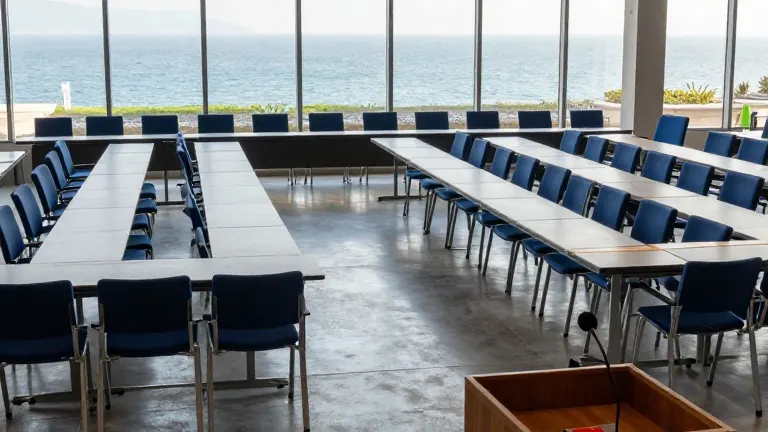
Turkish President Recep Tayyip Erdogan told a gathering of world leaders on Wednesday that the war in Gaza constitutes an ecocide, a term that expands the conflict's impact beyond human casualties to environmental degradation. He made the remarks at the UN climate summit, known as COP31, hosted in Antalya, Turkey.
Erdogan argued that the environmental toll of the war has been overlooked by the international community. He pointed to specific physical changes in the region, noting that centuries-old olive trees were cut down and that soil and water sources suffered from pollution. He described cities in Gaza as being reduced to large piles of rubble, stating that the destroyed infrastructure combined with heavy rainfall and flooding to inundate tens of thousands of tents and shelters.
Israel, which did not receive an invitation to attend COP31, responded with sharp criticism. The Foreign Ministry issued a tweet calling the remarks part of an anti-Israel campaign of lies. The ministry stated that Hamas, whose leaders are hosted in Turkey, bears responsibility for the devastation because it began the war with the October 7 massacre and built military infrastructure within civilian areas. The ministry added that those concerned with Gaza should demand Hamas disarm to allow reconstruction to begin.
The diplomatic friction continues a pattern of public disputes between the two leaders. Erdogan has long supported Hamas and criticized Israel, while Israeli Prime Minister Benjamin Netanyahu has called Erdogan an antisemitic tyrant. In September, Netanyahu said at the UN General Assembly that Turkey has become a superspreader of antisemitic lies.
Iranian President Masoud Pezeshkian also used the climate summit platform to accuse Israel and the United States of causing severe environmental damage during attacks on Iran. He claimed that strikes on fuel facilities at a major gas field in southern Iran released approximately 500,000 tonnes of carbon dioxide. He added that deliberate strikes on fuel depots near Tehran released another one million tons of carbon dioxide. Pezeshkian called for mechanisms to hold the US and Israel accountable for these emissions.
The specific figures cited by Pezeshkian have not been independently verified. However, several oil spills have been detected off the coasts of Gulf countries. Iran's foreign ministry has previously blamed this pollution on US military operations in the region. Both the US and Iran have targeted tankers in the Strait of Hormuz while seeking to enforce parallel blockades.
Pezeshkian arrived in Antalya on Wednesday and held discussions with several participating leaders during his visit. The current Middle East war began on February 28 with US-Israeli strikes that killed Iran's supreme leader, Ayatollah Ali Khamenei. Iran responded by launching missiles and drones at countries across the region, while its allied militant groups in Lebanon, Yemen, and Iraq joined the fighting.
More Business · Business Watchdog · Report a business · Got a Story?