Israel election chief: No fraud evidence found yet
Deputy Supreme Court President Noam Sohlberg stated that foreign interference suspicions have not yet produced concrete proof of wrongdoing in the investigation into the October 27 vote.
By Fernando Rojas ·

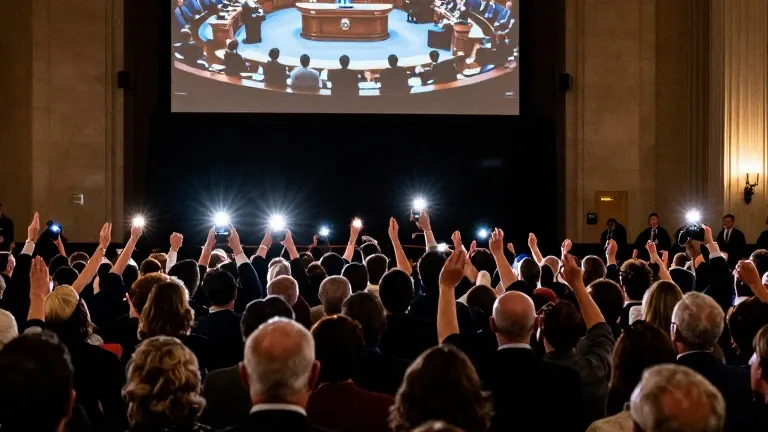
The investigation into potential foreign interference in Israel’s recent general election continues without a definitive finding of misconduct. On Thursday, Central Elections Committee Chairman Noam Sohlberg updated committee members on the status of the probe. He noted that while confidential information has been shared, it has not yet matured into admissible evidence. Sohlberg warned that such evidence may never materialize.
Sohlberg, who also serves as Deputy President of the Supreme Court, assessed the interagency cooperation during the inquiry. He wrote that the relationship between the Israel Police, the Shin Bet security service, and the Attorney General’s Office has been good. He specifically stated he found no instances where the Attorney General’s Office refused investigative requests submitted by the Shin Bet. This assessment addresses prior public disputes between the two agencies.
The friction stems from conflicting public positions by key officials. Shin Bet chief David Zini previously complained that Attorney General Gali Baharav-Miara hampered the investigation. In response, Baharav-Miara accused Zini of seeking to question senior Arab politicians without sufficient evidence. On Wednesday, Baharav-Miara said she had not seen anything in the investigation that would even remotely influence the outcome of last month’s vote.
Law enforcement and election officials have largely closed the door on major fraud. Police reportedly told the State Attorney’s Office that there is no suspicion of security offenses by Arab party heads. They also stated there is no need to interrogate these leaders over the allegations. Election officials have already declared the vote was conducted properly. Law enforcement described the probes into election misconduct as limited in scope.
Specific allegations center on a suspected vote-buying scheme involving the Ra’am party. Three Ra’am activists were arrested on election day. Ibrahim al-Garibi, one of the suspects, told Channel 13 news that his arrest was political persecution. He claimed police arrived at his home at 5 a.m. on election day without a search warrant. Al-Garibi said officers removed clothes from closets and damaged the home without finding incriminating evidence. He was released without condition by the Beersheba Magistrate’s Court a week later after being questioned three times.
Initial claims suggested Qatar funneled large sums to encourage Arab citizens to vote. Later reports indicated investigators were looking at possible transfers of a few hundred thousand shekels to Arab parties from the Palestinian Authority. Prime Minister Benjamin Netanyahu has used these allegations to argue that Arab parties stole the October 27 election. That vote resulted in him losing his parliamentary majority amid high Arab voter turnout.
National Security Minister Itamar Ben Gvir’s Otzma Yehudit party voted against certifying the results based on the stolen election claim. The party has submitted draft legislation to dissolve the Knesset. Sohlberg addressed media leaks regarding the investigation on Thursday. He described the leaks as a malignant phenomenon that harms the security-related aspects of the probe. He stated his complaint was about the repeated damage caused by the disclosures rather than etiquette.