Greta Thunberg tells COP31 Turkey must stop oil shipments she says are fuelling Israel's war on Gaza
Speaking at the climate summit in Antalya, Greta Thunberg urged Ankara to halt energy transfers to Israel, as a new report documented dozens of covert crude shipments from Turkish ports despite a trade embargo.
By News Media House Staff ·
Greta Thunberg used the COP31 climate conference in Antalya, Turkey, on Thursday to demand that Ankara stop fuel shipments from its territory to Israel, saying the transfers are "directly fuelling the genocide of Palestine".
Addressing a packed press conference alongside activists from Nepal, Australia, Palestine and Canada, Thunberg called on the Turkish government to "stop the transfer of oil and energy from its territory to Israel". Her remarks came shortly after President Recep Tayyip Erdogan declared in his opening address to the summit that Gaza has suffered "not only a genocide but also an ecocide", and called for the immediate entry of aid into the war-torn enclave.
Turkey's environment minister and COP31 president, Murat Kurum, told Turkish media earlier this week that Israel's leaders were not invited to the summit, which Turkey is jointly hosting with Australia, because of the mass killings of Palestinians in Gaza.
The campaign group Energy Embargo for Palestine told Middle East Eye it welcomed those statements and actions, but said an "uncomfortable contradiction still follows Türkiye throughout COP". "How can a government present itself as a climate leader while its territory remains an essential element of supply chains providing oil to Israel during its genocidal assault on Palestinians?" a spokesperson for the group said.
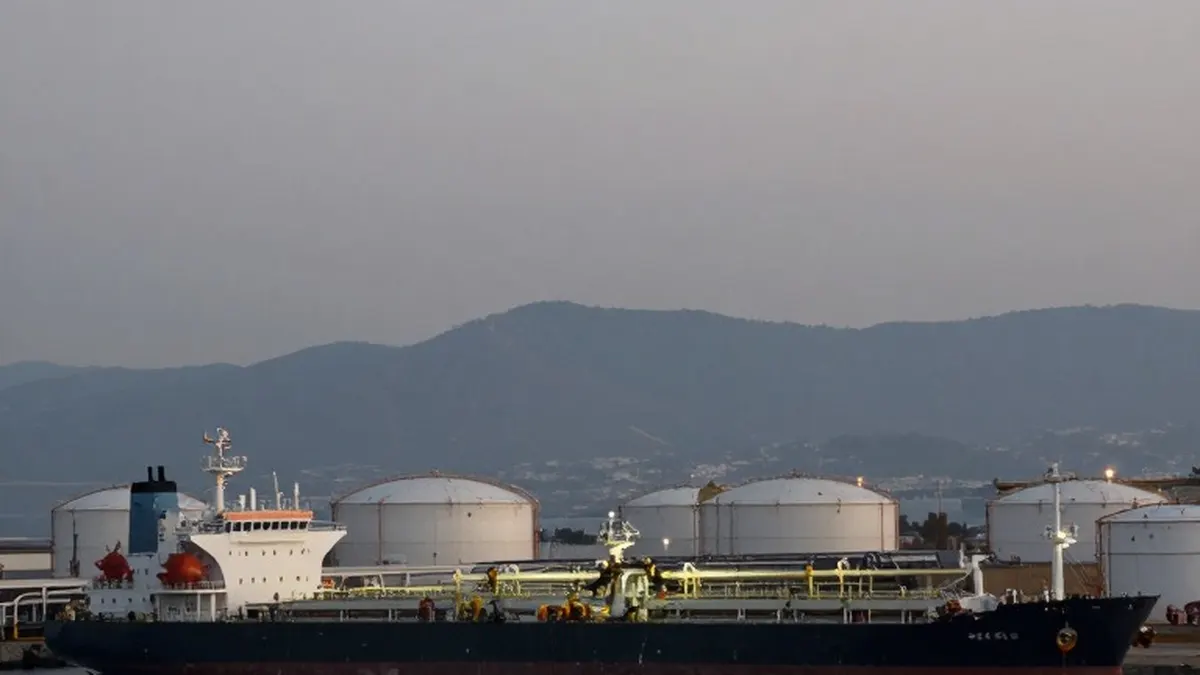
An updated report jointly authored by the group, the Palestinian Youth Movement and the Progressive International found that 77 crude oil shipments, totalling nearly 6,463 kilotonnes, left the Turkish port of Ceyhan for Israel between May 2024 and June 2026. Ankara declared a trade embargo against Israel in May 2024. The shipments involved Azerbaijani crude pumped through the Baku-Tbilisi-Ceyhan pipeline and loaded at Ceyhan.
The findings build on a January investigation by the same groups that documented 57 shipments of Azerbaijani crude sailing from Turkish to Israeli ports between May 2024 and December 2025. According to the report, the transfers were conducted covertly, with vessels listing false end destinations and disabling their tracking systems to avoid detection. Researchers reconstructed the journeys and confirmed the boats docked in Israel using satellite imagery and shipping data.
The report estimates that oil pumped through the pipeline accounts for more than 40 percent of Israel's total oil imports over the course of its war on Gaza, and that the crude is refined and used to fuel Israel's fighter jets, tanks and military vehicles. Turkey has maintained it does not control where oil carried by the pipeline is sold: the line is managed by Turkish state-owned energy company Botas but owned by Azerbaijan's state company Socar. In November 2024, Turkey's energy minister said exporters using Ceyhan "respected its decision to end trade with Israel".
Data from vessel-tracking firm Kpler, cited by Reuters, nonetheless showed exports of Azerbaijani crude to Israel surged by 31 percent in 2025, the highest level since 2022. And while Energy Embargo for Palestine said Turkish ministries reviewed the initial findings and pledged legal action against shipping agents accused of listing false destinations, the updated data records at least 20 further shipments, totalling an estimated 2,411 kilotonnes, leaving Turkey for Israel between 2 December 2025 and 30 June 2026.
Turkish diplomatic sources told Middle East Eye the pipeline is governed by international agreements and is a partnership of 10 firms, with the Turkish Petroleum Corporation holding a 6.53 percent share. They emphasised that "there is no sale of oil belonging to TPAO to Israel", adding that other companies using the pipeline "respect Türkiye's decision to cease trade with Israel, and no shipments are being made to Israel as the designated delivery point".
According to the data, most of the shipments were managed by Greek shipping operators Kyklades Maritime Corporation and Thenamaris Ships Management. Citing the group No Harbour for Genocide, Middle East Eye previously reported that the two firms accounted for 91.23 percent of oil shipments from Turkey to Israel between 2 May 2024 and 1 December 2025, and that Kyklades ran all but one of the 20 most recent shipments. Those voyages appeared to follow the earlier pattern: vessels listed destinations in Egypt and Italy but, according to port records, never docked there, and in most cases switched off their signals while heading south from Turkey, reappearing days later with a lighter load. Neither company responded to requests for comment by the time of publication.
Originally published by News Media House