Vegas Loop ridership lags behind official projections
Urban transport experts argue the private tunnel system diverts attention from public rail investments, despite claims of high capacity.
By Gavin Wilson ·
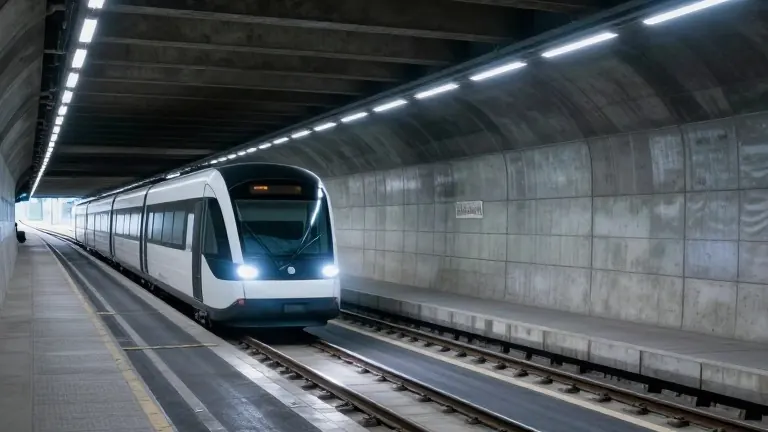
The Boring Company operates the Vegas Loop, an underground transport network in Las Vegas that has moved four million passengers since 2021. The system currently features 10 completed stations near the Las Vegas Convention Center and major Strip resorts. Officials have approved plans for 68 miles of additional tunnels and 123 new stations, including locations at Allegiant Stadium and UNLV.
When the Westgate station opened in January 2025, hotel and casino executives claimed the system could eventually handle 90,000 passengers per hour. This figure has been central to the company's pitch to the Las Vegas Convention and Visitors Authority, Clark County commissioners, and city councilmembers. The goal of the expansion is to reduce traffic congestion on surface streets.
Data from June suggests the current capacity is far below those projections. A report in The Guardian indicated the system moved a maximum of six Teslas per minute during that month. At that rate, the system transports approximately 2,400 passengers per hour. The Boring Company did not provide a comment for this story.
Benjamin Leffel, an assistant professor of public policy at UNLV, argues the system is a distraction from traditional public transit. He describes the Vegas Loop as a gimmick that is antithetical to public transportation. Leffel notes that the current funding model relies on private entities paying for station construction while the Boring Company pays for tunneling and collects fares.
Leffel identifies two main risks in the current planning approach. First, station locations are determined by the highest bidder rather than maximum public benefit or proximity to large populations. Second, the tunneling process may limit the city's ability to build a metro system in the future. He argues that a rail system can move as many as 30,000 passengers per hour and has a proven track record of relieving street traffic.
The professor believes the local economy would benefit from investing in light rail. He notes that buses are currently used primarily by the working class. Leffel suggests that slightly higher taxes to fund rail infrastructure would support a more diverse and thriving economy, as not all residents can afford cars.
More Business · Business Watchdog · Report a business · Got a Story?