Day of the Dead events spread from Mexico to US cities
The two-day holiday, Nov. 1 and 2, honors ancestors with altars, music, and sugar skulls, a practice that has moved from Latin America to major American cities.
By Gavin Wilson ·
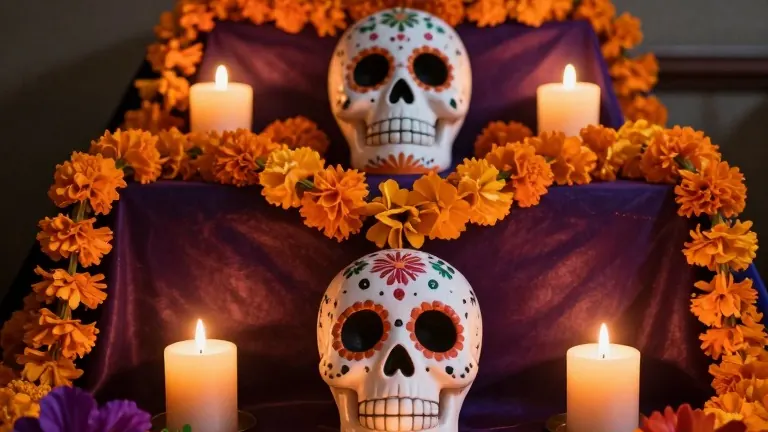
The ritual of Día de los Muertos begins immediately after Halloween ends. For two days, from Nov. 1 to Nov. 2, participants believe the gates of the afterlife open, allowing the spirits of the deceased to return to the world of the living.
The schedule is specific. The tradition holds that the spirits of children return first on Nov. 1 for a 24-hour visit. The spirits of adults arrive on Nov. 2 to join their families. During these brief windows, the dead are believed to eat, drink, dance, and play music with the people they left behind.
The event is defined by bright colors and specific aromas rather than the dark tones often associated with Halloween. Families build altars, known as ofrendas, and decorate them with plastic marigold garlands. Marigolds are called the flower of the dead because their scent is thought to guide spirits back home. Sugar skulls painted in pinks, yellows, blues, and greens are common decorations, alongside candles, candy, and the favorite foods of the departed.
Roots of the celebration reach back 3,000 years to pre-Columbian Mesoamerica. Modern observances mix those ancient rituals with Roman Catholic traditions. In Mexico, Guatemala, Brazil, and parts of Ecuador, the holiday remains a central cultural event. Artists create paper cutouts for altars, bakers produce sweet bread of the dead, and some families keep all-night vigils at cemeteries to greet returning spirits.
The holiday reached the United States largely through the Chicano movement. Regina Marchi, a journalism and media studies professor at Rutgers University, explained that Chicano artists in the 1970s adopted the ritual. She described the practice as an act of political resistance and cultural pride. The term Chicano is a self-identifying label used by Mexican Americans who are politically active in social justice issues.
Today, the celebration has expanded across the country. San Antonio and Los Angeles host some of the largest events. However, communities in New York City, Fort Lauderdale, Chicago, Phoenix, San Francisco, Seattle, and Anchorage also mark the occasion. The growth reflects a shift from a regional Latin American tradition to a national observance.
Source: FOX 5 DC