Young Shina Musicians Bridge a Community Divided by Kashmir's Line of Control
From Gurez to Gilgit-Baltistan, a new generation of singers is using social media to keep the Shina language alive and reconnect families split by a heavily guarded frontier.
By News Media House Staff ·
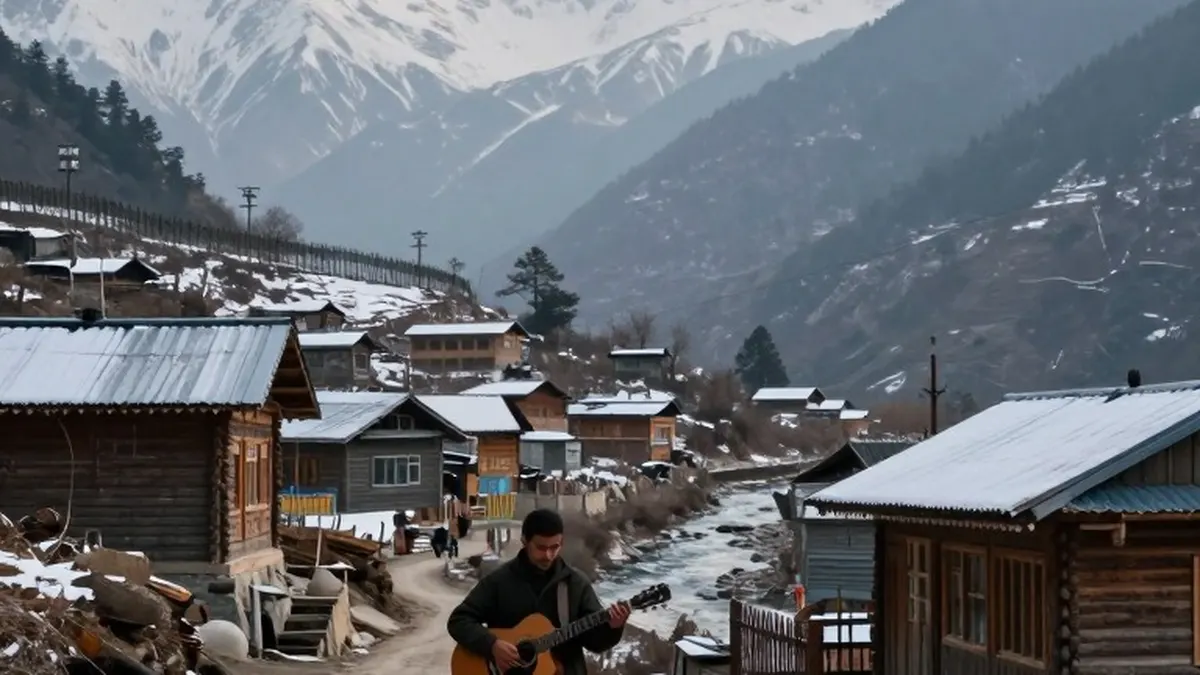
In the remote Tulail Valley of Indian-administered Kashmir, near the Line of Control, 25-year-old singer Aasim Yaseen was walking through his village of Buglinder when a college student from a neighbouring hamlet stopped him. The young man, Tanveer, pulled out his phone and played Sangh Mukh Shamah, a song Yaseen had recently released in Shina, their shared language.
The encounter encouraged him. "People here don't consider music work," Yaseen said. "Sometimes I think about going into another profession, but then someone plays my song on their phone, and I keep going."
Across Gurez in Indian-administered Jammu and Kashmir, Drass in Indian-administered Ladakh and Pakistan-administered Gilgit-Baltistan, young musicians like Yaseen are circulating Shina songs on social media. In doing so, they are sustaining their language and renewing bonds within a community divided for generations by the Line of Control, the de facto border splitting Indian- and Pakistani-administered Kashmir. Artists began posting songs on Facebook and YouTube in the late 2010s, and by 2020 residents were using online Shina music to reconnect across the mountains.
For Yaseen, the separation is family history. His grandfather told him stories of a great-great uncle who lived in Gilgit-Baltistan before Partition and remained there as the region came under Pakistani control. Movement became extremely difficult once the Line of Control was drawn, and security concerns eventually severed contact. "We were one family," Yaseen said. "But we were divided into two countries."
Gurez, the homeland of Indigenous Shina speakers, sits on historic routes linking the Kashmir Valley with Central Asia, yet it has no local crossing for families visiting relatives in Gilgit. Residents of Gurez and Drass say security restrictions make them wary of phoning or messaging relatives across the line, fearing contact could attract suspicion. Sharing songs online feels safer, since listeners on the other side can tune in without any direct exchange. "Songs became a medium," said a 35-year-old teacher from Purana Tulail village, who asked not to be named over security concerns. "Through music, we could convey a message without having to send it."
The musicians work under strain. After the April 2025 attack near Pahalgam that killed 26 people, most of them tourists, India and Pakistan exchanged strikes, and Gurez residents say they sheltered in bunkers or were evacuated to temporary camps, many leaving homes and livestock behind. Money is another obstacle. Yaseen, who studies music at Cluster University in Srinagar, more than 160km from home, says producing a single song costs him 30,000 to 35,000 Indian rupees, roughly $318 to $372. Musicians pool microphones, instruments and editing skills; for his April release Malalak, Yaseen shared video production costs with fellow musician Zia Ul Alam. Some border villages have little or no mobile coverage at all.
On the Pakistani-administered side, 38-year-old Salman Paras, a prominent contemporary Shina folk singer born in Sheikhpora Kilshay in the Astore district of Gilgit-Baltistan, has felt the same pull. His grandfather's brother stayed behind in Gurez when the rest of the family migrated to Gilgit, and they eventually lost touch. Decades later, a Shina musician on the Kashmir side found Paras's songs on YouTube and told him relatives of his had been traced to Kangan, a central Kashmiri town where many Dard families migrated from Tulail. "Politically we are divided, but musically our hearts beat together," Paras said. His song Karay Karay, recorded with Pakistani singer Ali Zafar with a video filmed during the cherry blossom season in Skardu and the nearby Katpana Desert, has been viewed millions of times on YouTube, and he has recently performed in Dubai and Muscat. "In my mind, I've drawn a cultural map that includes Chitral, Kohistan, Gurez and Ladakh," he said. "They are my people."
Others report similar experiences. Gilgit-based singer Iftikhar Uddin Iftikhar, 29, who released his first Shina album in 2018, says he now has friends across the border in Kashmir and Ladakh who listen to his music. "Shina music is our identity," he said. "I am not just promoting songs. I am keeping our language alive." In Gurez, 27-year-old Younis Majeed blends Shina folk melodies with contemporary beats, and his song Tamah Hoon has reached more than 21,000 viewers online. In Drass, 24-year-old Zain Drassi performed at local festivals in early September, calling it "a small recovery of our cultural space after it had been limited for so long by war and political borders," though he says professional production still requires travel to Srinagar, Bhaderwah or Himachal Pradesh.
The younger generation builds on elders who preserved the tradition without any digital audience. In Kangan, 53-year-old Yousuf Naseem, whose family fled Gurez during the 1999 Kargil conflict, has spent three decades carrying Shina music to new listeners. "We lost everything," he said. "But the songs travelled with us." Near Dawar, 67-year-old Fareed Ahmed Kaloo leads the Habba Khatoon Dramatic Club, founded in 1976 to preserve Shina folklore, and spent years walking between villages with a harmonium, performing at weddings and fairs. "We didn't do it for money," he said. "We did it because someone had to, and no one else would."
Linking the generations is Masood Samoon, a 78-year-old Shina writer and linguist from Gurez whose poetry has been turned into songs for more than two decades, including Yaseen's Malalak and Sangh Mukh Shamah. "Yousuf Naseem sang my songs," Samoon said. "He took my words to Kashmir, to people who had never heard Shina before. Now Aasim Yaseen sings them."
Originally published by News Media House