
Local Teacher Weaves Saint Studies Into School Mass for November
Students at St. John the Baptist in Vermillion perform a theatrical reenactment of saintly lives, concluding with a shared declaration on the universal call to holiness.
By Gavin Wilson ·
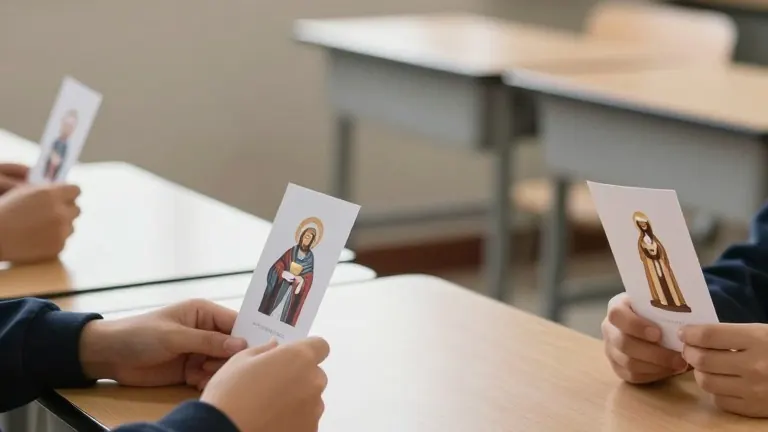
Students at St. John the Baptist Catholic School in Vermillion spend November preparing a specific performance for their weekly school Mass. The exercise moves beyond standard religious instruction, requiring pupils to research specific saints and synthesize their findings into a short theatrical piece. This tradition has been led by teacher Erin Midby for several years. The performances conclude with a unified chant from the student body: "You can be a saint, we can all be saints."
The timing of this curriculum aligns with the Catholic Church's observance of All Saints' Day on November 1. The holiday commemorates the faithful departed, both those formally canonized and the countless individuals who lived lives of quiet virtue without official recognition. Midby notes that the month invites reflection on the gifts received at baptism and confirmation, which are nourished through the Eucharist.
The list of recognized saints is extensive, ranging from biblical figures to modern historical icons. The Letanias of the Saints begin with Mary, Mother of God, followed by Joseph, Peter, and Paul. The list expands to include major figures such as Francis, Clare, and Catherine of Siena. More recent additions include John Paul II and Teresa of Calcutta. The roll call also includes beatified individuals who have completed the preliminary stages of canonization, such as Stanley Rother, Francis Xavier Seelos, and Fulton Sheen.
Midby argues that the formal canonization process captures only a fraction of the holy people in the world. She points to the "hidden saints" in local communities, individuals who practice their faith through daily actions rather than public miracles. These are the neighbors, relatives, and friends whose lives demonstrate steadfastness during difficult times. The goal of the school program is to make these abstract concepts tangible for young learners.
Midby cites her own maternal grandmother, Anna, as a primary example of this quiet holiness. Anna died in 1943, but her stories have been preserved by Midby's father. Anna's husband, Matt, died in 1926 from injuries sustained in a construction accident on a road between Hampton and Farmington. Medical care in that era was limited, and Matt died at home, leaving Anna to raise six children alone on a farm.
The family faced severe economic hardship just before the Great Depression. With no social safety net beyond family and neighbors, Anna had to be resourceful. One anecdote involves the early days of aviation, when pilots used local farm fields for takeoff and landing practice. During one such incident, a plane crashed, damaging the family's potato crop. No one was injured, but the potatoes were destroyed.
Anna immediately sent her children to retrieve the plane's engine and store it in the barn. She anticipated that the owner would want it back. When the owner arrived, Anna negotiated firmly. She refused to return the engine until she was reimbursed for the cost of the potatoes lost in the crash. This act of practical stewardship ensured the family's food supply remained intact during a time of scarcity.
Midby describes Anna's life as being built on a foundation of faith, sustained by Sunday Mass, the rosary, and other devotions. These practices helped her family endure the storms of the early 20th century. The school's November performances aim to connect students to this legacy, showing them that the call to sainthood is not reserved for famous figures but is a daily practice accessible to everyone.
The educational approach combines research with creative expression. Students must understand the historical and spiritual context of their assigned saint before staging their scene. The final repetition of the phrase "we can all be saints" serves as a collective affirmation of this belief. The program concludes as the month of November draws to a close, leaving the students with a practical model for how faith is lived out in ordinary circumstances.