Indonesia Police Chief Reveals Wiretapping Scandal Extended Beyond President
Gen. Suyudi Ario Seto told lawmakers that surveillance targeted ministers, governors, and activists, widening a case that has already led to the detention of three senior generals.
By Fernando Rojas ·
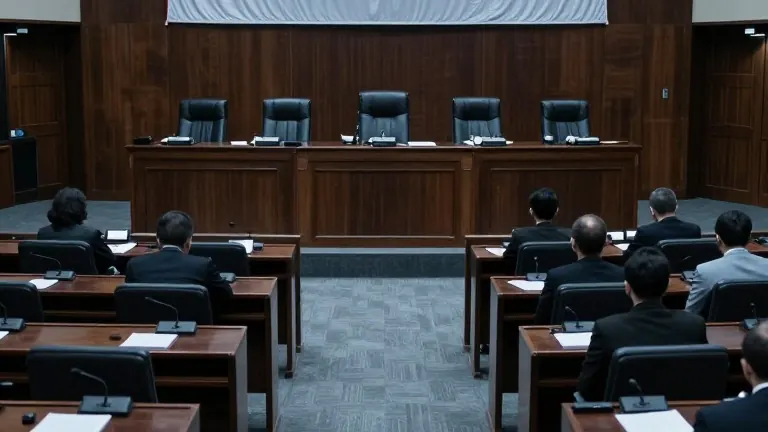
Indonesia’s police chief testified to parliament on Thursday that an illegal wiretapping operation aimed at President Prabowo Subianto also monitored a wide circle of senior officials. Gen. Suyudi Ario Seto told Commission III that the surveillance targeted not only the president but also palace staff, ministers, governors, lawmakers, and anti-corruption officials.
Seto clarified that being on the target list did not imply suspicion of wrongdoing. He noted that the operation was investigated as a potential case of treason. The government has ordered 20,000 troops to Jakarta as a precaution, though most remain on standby in barracks rather than patrolling the streets.
The scandal broke earlier this month when authorities detained three senior police generals. Among them was Gen. Listyo Sigit Prabowo, who had close ties to former President Joko Widodo. A fourth official, Gen. Slamat Uliandi, was later implicated but remains out of custody for health reasons. Listyo Sigit Prabowo had been named Prabowo’s chief of staff in October, creating a direct conflict of interest in the investigation.
Investigators have found evidence that some recordings were deleted. Police said that Nasution, who served as an aide-de-camp to Prabowo, requested permission from Uliandi in October to delete files of the president’s calls. Uliandi approved the request, and the data was removed from the system. Nasution’s lawyer, Krisna Murti, stated in a video that his client would cooperate fully and clarify the case.
The legal case focuses on electronic communications rather than treason. Seto said suspects face charges under Article 258 of Indonesia’s new Criminal Code for unlawful interception. This carries a maximum sentence of 10 years. They also face charges under Article 332 for handling electronic data, punishable by up to six years, and Article 32 of the Electronic Information and Transactions Law, which allows for a maximum penalty of eight years.
Political tensions have risen alongside the legal proceedings. Evan Laksmana, an analyst with the International Institute for Strategic Studies, described the situation as a painful breakup between Prabowo and Widodo. He noted that Widodo’s influence had overshadowed Prabowo’s decision-making in recent years. The rift has been further strained by the resignation offer from Vice President Gibran Rakabuming Raka, Widodo’s son, who cited an unrelated academic credential investigation.
Public demonstrations in several cities have demanded accountability. In Yogyakarta, police detained 154 people on Tuesday after clashes during a protest by roughly 2,000 students and activists. The protesters criticized Widodo’s continued influence and called for Raka’s resignation. Parliament’s Commission III is currently working to determine the motive behind the wiretaps and identify all parties involved.
Nasution was dishonorably discharged from the police force on Tuesday following an internal ethics hearing. Police spokesperson Johnny Eddizon Isir said similar proceedings would be held soon for the other three implicated officers. None of the suspects have made public statements regarding the specific details of the surveillance operation.