
US Air Traffic Control Failure Grounds All Departing Flights Nationwide
A communications outage forced the FAA to halt all departing flights across the US, marking the second such nationwide shutdown since 2001 and causing significant international disruption.
By News Media House Staff ·
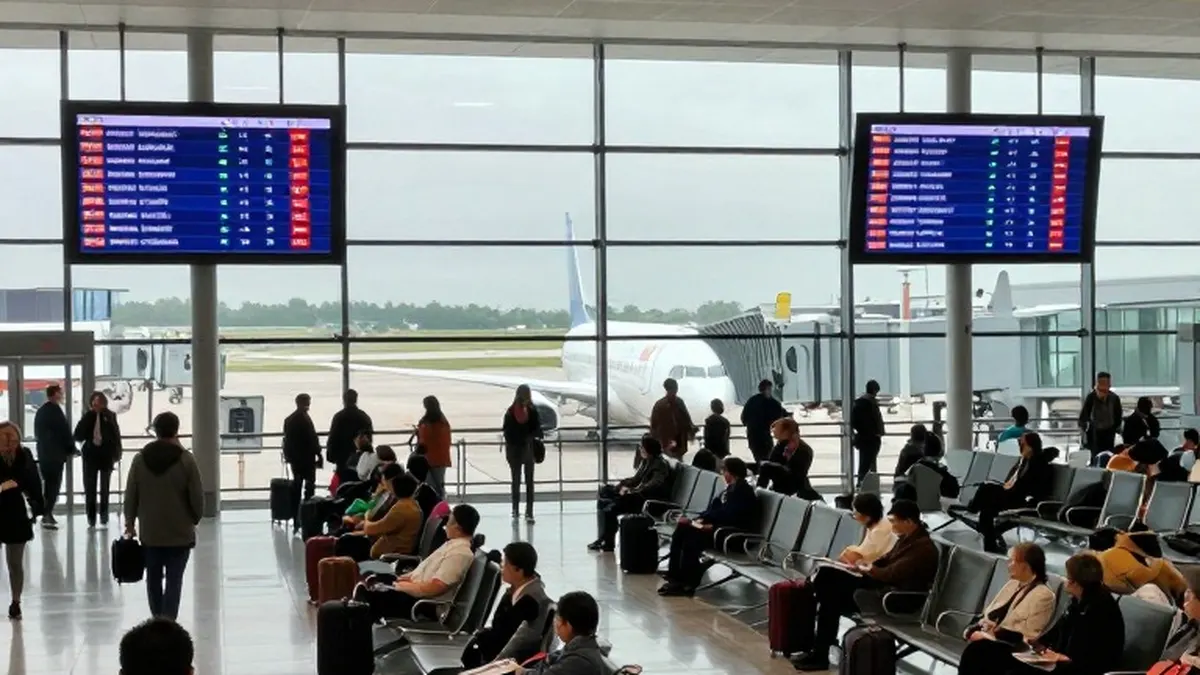
The Federal Aviation Administration implemented a nationwide ground stop on Friday, halting all departing flights across the United States. This action was taken after a communications failure affected multiple air traffic control centers. It represents only the second time since the September 11, 2001, attacks that such a total shutdown has been ordered.
The sudden halt created immediate chaos at airports throughout the country. According to flight-tracking data from FlightAware, airlines canceled more than 1,000 flights and delayed nearly 10,000 others. While thousands of aircraft that were already in the air were permitted to land, planes on the ground were ordered to remain at their gates until further notice.
The disruption extended well beyond US borders, affecting operations in Canada and Europe. Eurocontrol, which manages air traffic in 42 member states including Israel, requested that all departing flights be halted. This coordinated response highlights the interconnected nature of modern aviation systems.
Department of Homeland Security officials stated that there were no signs the outage was the result of a cyberattack. Secretary Markwayne Mullin told reporters outside the White House that there was no indication of a nefarious attack, describing the incident as a telecommunication outage. He added that President Donald Trump had been briefed and urged the public not to fear for the safety of their loved ones.
Mullin noted that his department is examining all possible causes for the failure, which includes a newly implemented AI-powered air traffic control system. The event serves as a dramatic indicator of the strain currently placed on the US air traffic control system, which has faced ongoing challenges related to equipment failures, controller shortages, and aging infrastructure.
Much of the technology used by the FAA is decades old. Just last week, the agency announced plans to phase out the use of floppy disks for providing weather and other critical data at over 400 facilities by the end of 2028. Passengers in cities ranging from Boston to Seattle and New York to Los Angeles crowded departure halls, watching as boards filled with delays and cancellations.
Louise Maher, a 47-year-old passenger hoping to fly from Newark to London, expressed her frustration despite warnings that her British Airways flight would likely be delayed. The ground stop also left arriving aircraft stranded on taxiways as gates became filled to capacity. Airline officials reported that the FAA had not provided a specific timeline for lifting the restriction, though some preliminary signs suggested communications issues were improving in certain areas.
The FAA issued the nationwide ground stop at 3:54 p.m. Eastern Time. At that moment, 4,042 flights were airborne and heading to US airports, according to Flightradar24. Shortly before the announcement, traffic in Chicago had already been halted due to similar communications issues. Aviation analyst Robert Mann warned that if the stop continues into the evening, it could take the entire weekend to resolve the resulting network disruptions.
The previous nationwide ground stop since 2001 occurred in January 2023, when the FAA halted domestic departures for less than two hours. This current outage occurs amid heightened global concerns about aviation security, following a wave of hoax bomb threats in Europe that forced unscheduled landings this month. There is no immediate indication that the US failure is related to those incidents, nor to simultaneous nationwide internet and communications issues experienced by the US National Weather Service.
In response to the ongoing strain on the system, the White House and the Department of Transportation urged Congress on Friday to approve an additional $30.1 billion. This funding is intended to upgrade the United States’ aging airports and air traffic control infrastructure, a need made urgent by recent setbacks that have disrupted flights and raised safety concerns.
Originally published by News Media House