
Murnau's 1926 Faust Fails at Box Office
The German expressionist film was a commercial disappointment upon release, yet its technical innovations and visual style have secured its status as a cinematic classic.
By Gavin Wilson ·
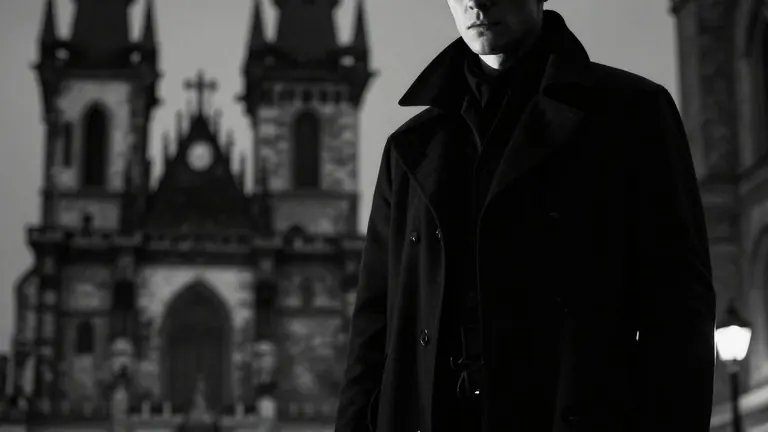
F. W. Murnau's 1926 film Faust failed to attract audiences or critics when it first hit theaters, marking a commercial and critical failure for the production. The film, which depicts the alchemist Faust's struggle against the devil Mephisto, was considered expensive and ambitious for its time. It briefly held the record for the most costly German film production. Despite the lackluster initial response, the movie is now widely regarded as the definitive cinematic adaptation of the legend.
The narrative draws from Johann Wolfgang von Goethe's literary work, specifically Part 1, and traditional folk tales. In the film, Mephisto strikes the town with a plague, leading Faust to accept the devil's help to save his people. Faust's good intentions are compromised by his vanity and desire for youth, leading to a romantic involvement with Gretchen. Mephisto remains a constant threat, using his trickery to challenge Faust's soul, though his own nature as a cruel trickster may ultimately cost him the contest.
Murnau applied the visual aesthetics of the German expressionist movement to epic proportions. The production design features surreal elements, stark contrasts between shadow and light, and theatrical performances. The film employs special effects at various scales, including a sequence where Mephisto blots out the sun with his wing. Another scene features a 'Prince Ali' style spectacle that predates similar sequences in later animated films. These effects were designed for impact and imagery rather than realistic accuracy.
Emil Jannings portrays Mephisto, bringing a mix of zeal and menace to the role. At the time of the film's release, Jannings was in the prime of his career, delivering high-caliber performances. He later became famous for winning the first Best Actor Oscar and appearing in several Nazi propaganda films. Camilla Horn plays Gretchen, delivering a notable performance in a scene where she contemplates her joy while facing death in prison. Her acting style has been compared to that of Lillian Gish.
The film showcases Murnau's advancements in camera movement, building on techniques he developed with Karl Freund in The Last Laugh in 1924. In Faust, a flying sequence uses a trolley and ingenuity to create a sense of speed and magical motion. A scream for help from a distance is visualized through a superimposed image of Gretchen moving across the landscape. The cinematography also relies on static, gothic compositions, such as Mephisto towering over the town and Gretchen alone in the snow. The intertitles feature artistic designs that change dynamically with the text.
The legend of Faust continues to influence cinema and other media. The story has been reinterpreted by directors such as Jan Švankmajer in 1994 and Alexander Sokurov in 2011. A screening of Sokurov's version is scheduled for December 3. The 1926 film remains in the public domain, allowing for free access. Its technical achievements and dramatic contrasts have established it as a standard for black-and-white cinematography.
The film's initial reception did not reflect its later reputation. Audiences and critics at the time did not view it as a success. However, the technical execution and visual style have endured. The movie demonstrates the potential of the medium to explore complex themes through innovative visual techniques. It stands as a key example of German expressionist cinema and its impact on the history of film.