Hong Kong Judge Hands Joshua Wong 10-Year Sentence for Collusion Charge
The 30-year-old activist will serve the new term concurrently with his existing sentence, reducing his expected release date by several years.
By Fernando Rojas ·
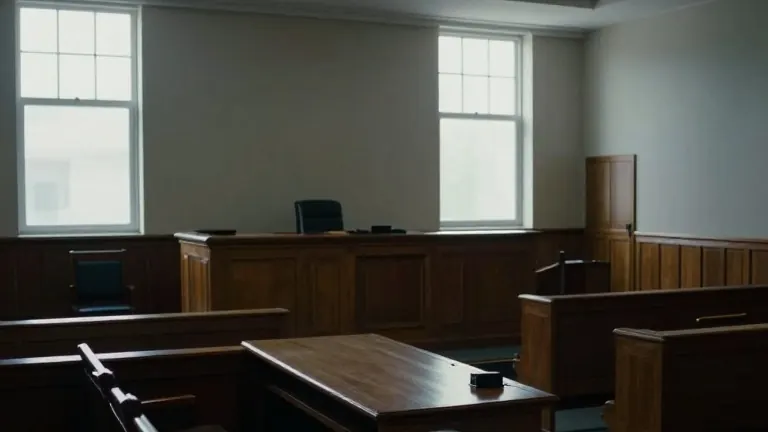
Judge William Tam sentenced Joshua Wong to 10 years in prison on Thursday for conspiring to collude with foreign forces, a charge under Beijing’s national security law that marks the second major conviction in the activist’s case. The ruling concludes a legal process that began in 2025 and caps a decade of legal battles for the former student leader.
Tam stated that Wong’s offense was of a grave nature and rejected the defense argument that his role was limited. The judge explained that he considered a 13-year sentence as a starting point but reduced the term because Wong pleaded guilty in September. This plea, which typically lowers the penalty, was a key factor in the final calculation.
Wong is currently serving a four-year, eight-month sentence for the city’s largest national security case linked to an unofficial primary election. He had been scheduled for release in January 2027. By ordering the two sentences to be served concurrently, the court effectively extends his incarceration, leaving him with approximately two months remaining on his previous term before the new 10-year clock takes full hold.
The prosecution argued that Wong and fellow activist Nathan Law agreed around 2016 to lobby internationally for democratic self-determination. They cited meetings with U.S. politicians Nancy Pelosi and Marco Rubio in 2016 and 2019 as evidence of efforts to secure sanctions against Hong Kong and China. The state contended that after the security law passed, Wong continued to support these efforts from within Hong Kong using foreign media and social platforms.
Outside the courtroom, Wong appeared calm and thanked his supporters as he left. Tiffany Chin, a former member of the now-disbanded group Scholarism, was in tears. Resident ET Wong, who knew Wong as a teenager, described him as a figure with big-picture thinking who walked a difficult path for human rights. She stated that in her heart, he should not have spent a single day in wrongful imprisonment.
Beijing views Wong as an anti-China figure who supports independence, a stance that crosses its red line. Authorities maintain the security law is essential for stability following the 2019 protests. Eric Lai, a research fellow at the Georgetown Center for Asian Law, said the repeated use of national security charges shows the government’s determination to keep prominent activists in prison to chill civic activism.
Wong’s lawyer, Derek Chan, urged the court to give the defendant hope, noting that Wong wishes to care for his parents after release. Friends reported that during his nearly six years behind bars, Wong continued to read, exercise, and teach himself guitar. A pro-Beijing newspaper recently criticized a 2017 Netflix documentary about Wong for beautifying his crimes, a report that coincided with the film climbing to the top of local popularity charts.