Activist Fergie Chambers defends himself in Madrid against US extradition
American activist Fergie Chambers appeared before a Spanish court to argue against his extradition, describing the humanitarian crisis in Gaza as the defining moral issue of the current era.
By News Media House Staff ·
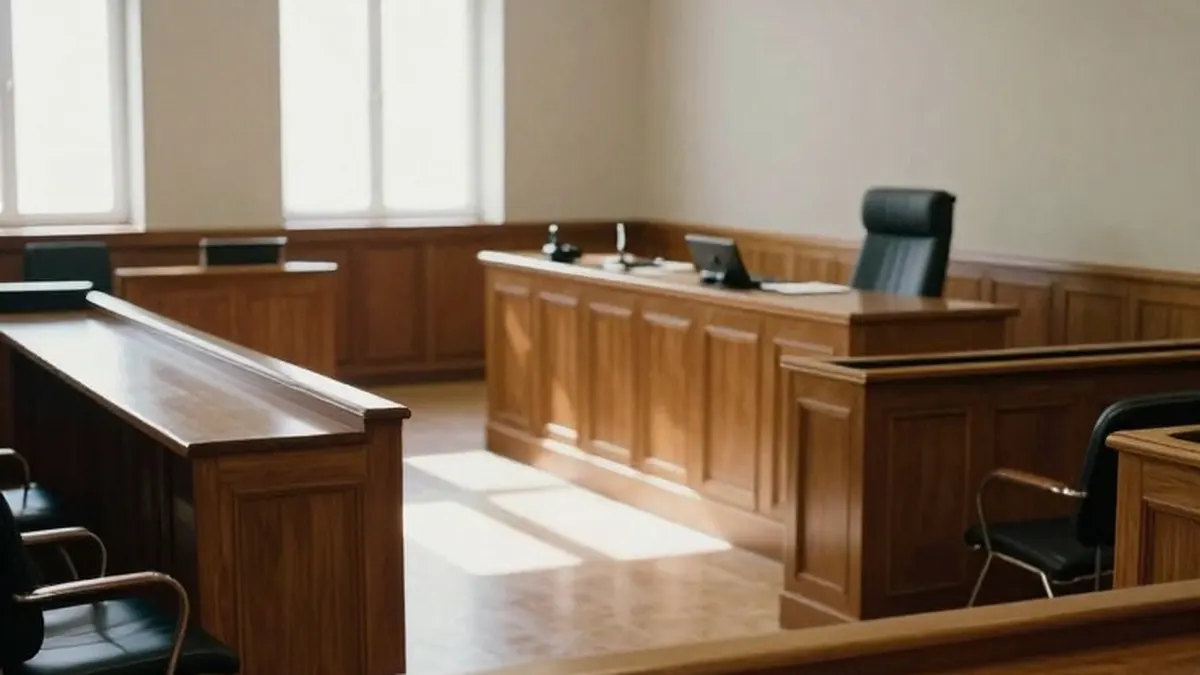
American activist Fergie Chambers appeared before the Audiencia Nacional in Madrid on Friday to defend himself against a US extradition request. Wearing a navy blue jacket and a grey shirt that displayed neck tattoos, Chambers addressed the charges that he intended to provide material support to Hamas. He characterized his support for humanitarian efforts in the Palestinian territory as a response to what he called the prevailing moral question of our time.
Chambers, who is an heir to the Cox family fortune, was arrested in July on the Spanish island of Ibiza. If he is extradited and convicted on the lead charge of international money laundering, he faces a maximum prison sentence of twenty years. US prosecutors have also charged him with riot and conspiracy to riot. The indictment alleges that after leaving the United States in 2023, he transferred approximately $7.5 million abroad with the specific intent of supporting Hamas.
During the hearing, Chambers disputed the allegations, stating that the funds were used for lawful purposes. He cited investments in local businesses and sponsorship of Club Africain, a football team in Tunisia, as examples of his financial activities. He also insisted that his involvement in protest actions had always been non-violent. In a prior submission, his defense lawyers argued that the Trump administration had mistranslated the charges to exaggerate their severity to Spanish authorities.
When asked if he consented to being surrendered to the United States, Chambers replied that he did not. He explained that his wealth came from the sale of his shares in Cox Enterprises in 2023. The family conglomerate, which began as a newspaper business in 1898, has since expanded into media and automotive services. Chambers noted that Jewish friends from his childhood in Brooklyn had introduced him to the Palestinian cause.
Chambers detailed his financial contributions to various humanitarian projects. He mentioned a $100,000 grant to the Zaynab Project for mental health support for orphaned children in Gaza. He also reported donating $250,000 to the Sameer Project, which helped establish a bakery and a desalination plant in northern Gaza. Following his arrest, the charity announced it would pause operations, affecting tens of thousands of Palestinians.
The activist also addressed the sponsorship of Club Africain, the reigning Tunisian football champions. He explained that he negotiated a four-year, four million euro agreement to help the club eliminate debts and rehabilitate its youth program. The club won the Tunisian Championship the year after the agreement was signed. Chambers described his involvement with Palestine Action USA as an idea of protest rather than a formal organization, particularly targeting Elbit Systems, Israel’s largest arms manufacturer.
Defense lawyer Aitor Martinez highlighted that the US administration had not charged Chambers with financing terrorism or material support for terrorism. Martinez argued that there was no evidence that even a single cent of Chambers' money was used for violent or terrorist acts. The defense also pointed to procedural irregularities in the Spanish translation of the extradition request, describing the changes as manipulation that altered the interpretation of the original documents.
The hearing also covered the transfer of Chambers' phone to US authorities. The defense argued that this transfer occurred without informing his lawyers, violating Spanish law and the US-Spain extradition treaty. Chambers denied that he left the United States to run, noting that he had lived next door to the US ambassador in Tunis. He stated that he had no outstanding legal issues when he departed.
In his concluding remarks, Chambers described the personal toll of his detention. He missed his grandmother's funeral and expressed concern about being present for his wife's expected delivery in March. He said he had been in prison since July for what he described as speaking emotionally. Chambers denied any contact with terrorist organizations and asked the court for justice, reason, and mercy.
Originally published by News Media House