Hilton and Ocasio-Cortez push House to pass Defiance Act for AI deepfake victims
Prominent advocates and lawmakers are urging the U.S. House to vote on the Defiance Act, a bipartisan bill that would create a civil right to sue for victims of non-consensual AI-generated explicit images.
By News Media House Staff ·
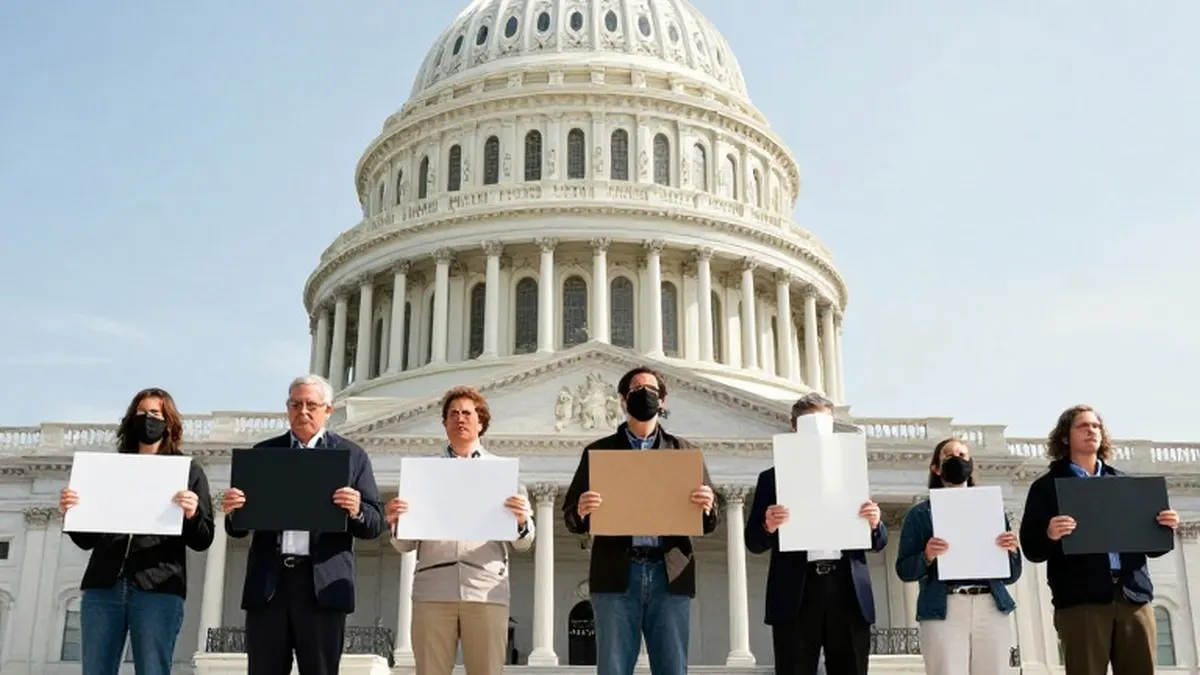
Paris Hilton and Rep. Alexandria Ocasio-Cortez (D-NY) joined other supporters on the U.S. Capitol steps on Tuesday to urge the House of Representatives to pass the Defiance Act. The bipartisan legislation aims to provide new legal remedies for victims of AI deepfake pornography, a growing concern as artificial intelligence tools make it easier to create explicit images from ordinary photos. Despite two years of effort, the bill has yet to receive a floor vote in the House.
The Defiance Act, formally known as the Disrupt Explicit Forged Images And Non-Consensual Edits Act, was passed by the U.S. Senate by unanimous consent in January 2026. The measure seeks to close gaps in existing federal law by establishing a clear civil right to sue. If enacted, survivors could take legal action against individuals who create, share, publish, or threaten to distribute explicit deepfakes without consent. Victims would also be able to recover legal costs and seek court orders for content removal.
Hilton, who is serving as chief advocacy officer for digital identity firm Loti AI, described the issue as deeply personal. She recounted being pressured into recording an intimate video with her then-boyfriend Rick Salomon when she was 19. The recording was later released without her consent. Hilton noted that AI has amplified this trauma, allowing anyone to turn an innocent photo into explicit content. She stated that millions of women and children are affected, and many lack legal protection because current laws have not kept pace with the technology.
The proposed bill builds on the Take It Down Act, which President Trump signed into law in May 2025. That law made certain disclosures of non-consensual intimate images, including AI-generated deepfakes, a federal crime and required platforms to remove such material within 48 hours of a valid request. However, critics argue that reliance on federal prosecutors and the lack of separate civil remedies leave many victims without adequate recourse. Hilton said current federal law sometimes does not work, leaving victims in need of another way to hold perpetrators accountable.
The bill was originally introduced in June 2024 by Texas Sen. Ted Cruz following a case in Aledo, Texas, where a 14-year-old student’s image was edited to appear nude and circulated on social media. Omny Miranda Martone, founder of the Sexual Violence Prevention Association (SVPA) which helped author the act, highlighted the urgency of the legislation. She stated that she was personally deepfaked while fighting for the bill, reinforcing the need for House leadership to act. The SVPA delivered letters to House Speaker Mike Johnson and Majority Leader Steve Scalise on Tuesday, urging them to bring the measure to the floor.
Support for the Defiance Act has grown, with 117 endorsements from various entities. These include technology companies like Microsoft, Snap, and OpenAI, which became the first AI company to endorse the bill in June 2026. Advocacy groups such as the National Organization for Women and the Center for Democracy and Technology also support the measure. Chris Lehane, OpenAI’s chief global affairs officer, described the legislation as smart and pushed for its passage.
In the House, the bill currently has 70 cosponsors, split evenly between 35 Democrats and 35 Republicans. It was introduced by Rep. Ocasio-Cortez in May 2025 and referred to the Judiciary Committee. House Speaker Johnson called the bill good policy in September but noted a lack of consensus. Reports suggest some Republicans were hesitant to advance the measure to avoid giving Ocasio-Cortez a legislative win ahead of the midterms, though specific objections have not been publicly detailed.
If the House does not act before the current Congress ends, supporters will need to reintroduce the bill in the next session. The path forward will depend on the new composition of the House and whether Democratic leaders, who are projected to hold a majority, prioritize the measure. The exact size of the Democratic majority is not yet known, but the outcome of the upcoming elections will be critical to the bill’s fate.
Originally published by News Media House
More News · National news · Report a business · Got a Story?