Anthropic IPO Valuation Hinges on $900B Infrastructure Pledge
The company behind Claude is pricing its public debut at roughly $1.3 trillion, a figure that depends heavily on future cash flows to cover massive compute commitments.
By Leah Thompson ·

Anthropic has priced its initial public offering at approximately $1.3 trillion to $1.4 trillion, a valuation that stands out in the current market despite falling short of earlier speculative estimates that reached $2 trillion. The company, which developed the Claude model, is entering the public markets with a financial profile defined by massive future obligations rather than immediate debt. This pricing strategy reflects the high expectations investors have for the firm's ability to convert rapid revenue growth into sustainable profit.
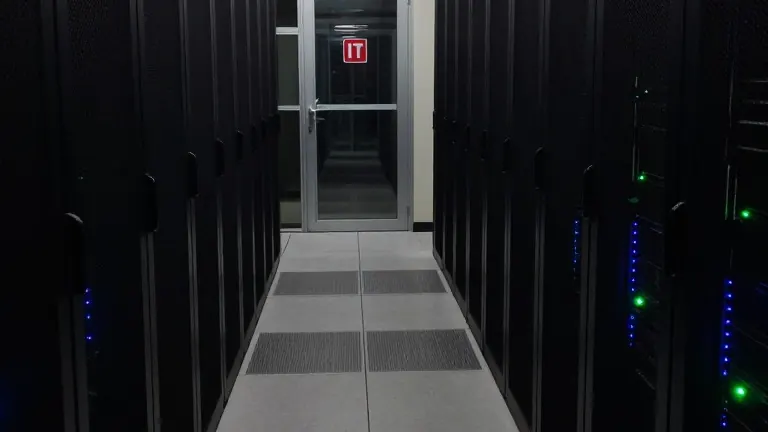
The primary concern for analysts lies in the scale of Anthropic's infrastructure spending. Recent securities disclosures indicate that the company has entered into nearly $900.9 billion in purchase commitments and lease agreements, primarily for computing hardware. Of this total, approximately $70.7 billion is due within the 12 months following September 30, 2026. The remaining balance is spread over the next decade, with roughly $451.6 billion expected to be incurred before the end of 2030 and the rest stretching through 2045. While these are contractual commitments rather than existing debt, they represent a significant future financial burden that requires careful management.
To support such a valuation, Anthropic must generate substantial revenue. The company reported an annualized revenue run rate of approximately $81 billion as of October. This figure significantly exceeds the less than $20 billion in annual revenue that has been cited in some previous discussions. However, revenue run rates do not equate to profit or free cash flow. The company must still cover costs for research, personnel, electricity, and facilities. Investors are essentially betting that Anthropic will generate extraordinary profits over many years to justify its trillion-dollar market capitalization.
The economics of serving AI users present a complex challenge. A single high-end GPU, costing around $20,000 at retail, might serve 15 to 20 light users or a few intensive coding users. If those light users pay $20 monthly, the hardware alone takes 50 months to recoup, excluding other operational costs. Even at a hypothetical wholesale price of $4,000 per accelerator, the break-even period remains significant. This highlights the tension between subscription revenue and the high cost of maintaining the infrastructure required to process heavy workloads, such as long-running coding agents.
Nvidia holds a dominant position in this ecosystem, benefiting from the industry's demand for accelerators and high-bandwidth memory. The company has announced an agreement to acquire Hugging Face for approximately $12.93 billion, a move that extends its influence beyond hardware into model distribution. Hugging Face serves as a central hub for developers to discover and share machine learning models. Critics argue that Nvidia's control over both the hardware and a key distribution platform could limit competition, though the company maintains that the platform will remain open to developers.
The rise of open-weight models adds another layer of complexity to the market. Projects from DeepSeek, Alibaba, and others allow developers to run advanced AI on their own infrastructure, reducing reliance on expensive proprietary APIs. Techniques like quantization allow large models to run on cheaper hardware by reducing memory precision. For example, a 200-billion-parameter model that requires 400 GB of memory at 16-bit precision can be compressed to roughly 100 GB at 4-bit precision. This shift makes AI more accessible and could pressure the pricing power of companies that rely on centralized, subscription-based services.
The situation resembles the dot-com era, where technological innovation was real, but financial valuations often outpaced underlying business fundamentals. While the AI revolution is genuine, the question remains whether current valuations are supported by sustainable unit economics. Investors are left to weigh the promise of future growth against the heavy cost of the infrastructure required to deliver it. The outcome will depend on whether companies can efficiently manage their resources and maintain profitability as the market evolves.
As Anthropic prepares to list, the market will closely watch its ability to balance aggressive expansion with financial discipline. The coming years will determine whether the company can turn its massive revenue run rate into the profits necessary to support its valuation. For now, the focus is on the numbers: the billions in commitments, the growth in user adoption, and the competitive landscape shaped by both proprietary giants and open-source challengers.